
CoCo on the Brain

Cocoa by AngryJulieMonday on Flickr, Creative Commons

Cocoa by AngryJulieMonday on Flickr

CoCo, meaning Costume College, of course. I’ve been going back & forth about what to make for my Gala gown. I had one idea all set, with fabric bought months ago. And then … Costume Attention Deficit Disorder struck. Alas! Now I’m scrambling to see if I can find / afford new fabric in time.

I’m also teaching a class, just one, after taking a break last year from teaching far, far too many classes the previous years. I’ve got to assemble kits for my hands-on Elizabethan wired cap class. I’m teaching a version of this class at the SCA West Kingdom’s Arts & Sciences Tourney in June as well, so really, I’m just going to create all the kits for *that* & use what’s leftover for CoCo, then add to it. Yeah, I made it easy on myself that way.

Which is good, because my Gala gown will be patently insane to make. Nope, not gonna tell what it is. Just that it’s nuts. And it kinda sorta goes with CoCo’s theme this year, if you stretch.

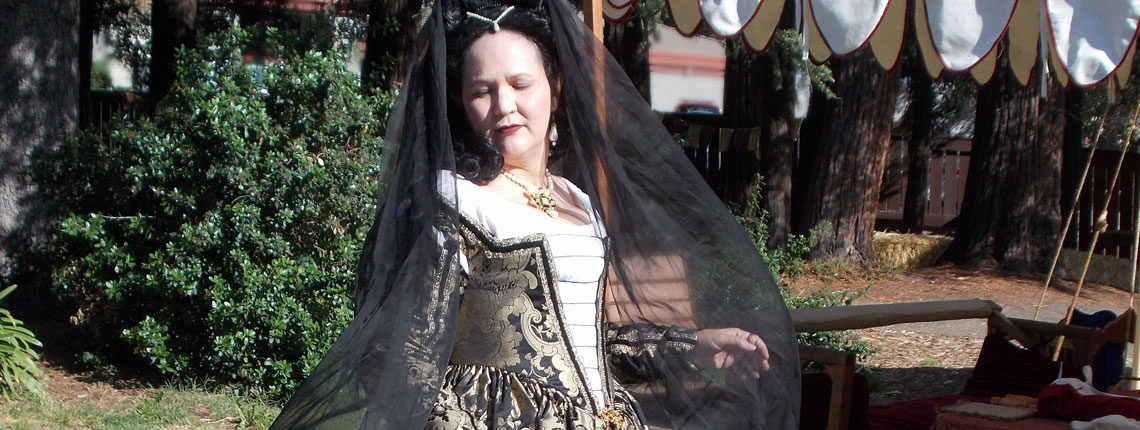
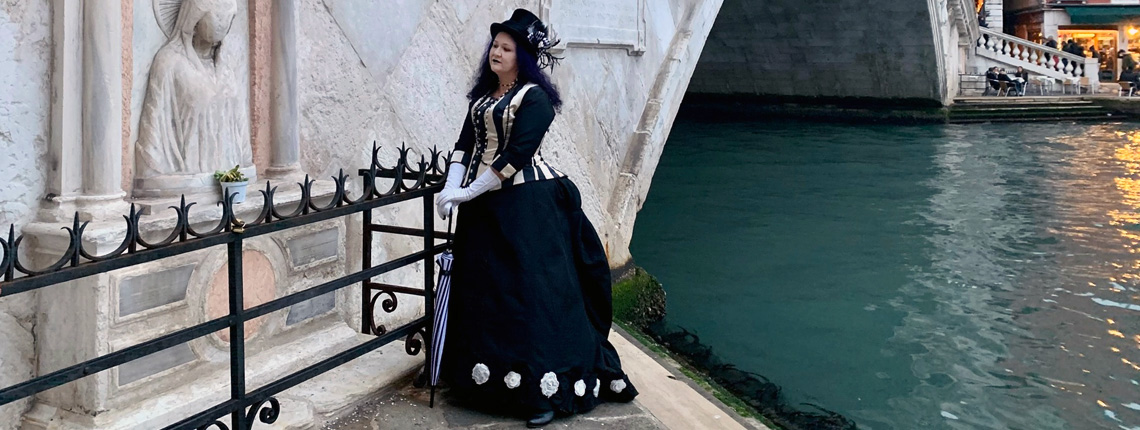
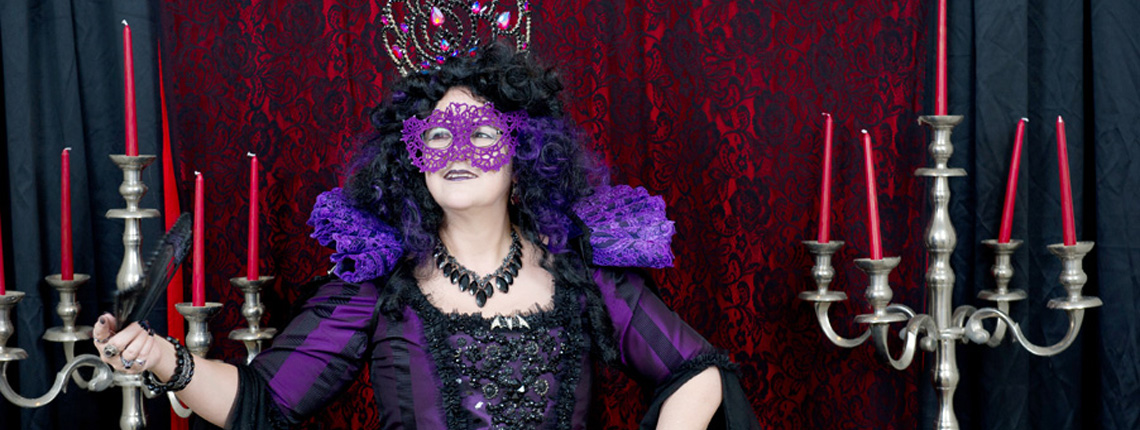
I also think I’ll wear costumes at CoCo, for a change. I got out of the habit because it just got to be tiresome, what with all the teaching & going to classes & other schlepping around. Not to mention the current hotel has such fabulous poolside cabanas that are better suited to modern summer attire. But I’ll have to wear something Elizabethan for my class to show how the caps look, thus I’ll be costumed on Sunday. And I usually do goth it up a bit on Friday. That’s two out of three, why not throw on a costume Saturday too? There is a small chance that I won’t be able to arrive until late Thursday & will have to leave late Sunday, due to work, meaning I’d have to fly. Smaller suitcases, which could impact costume choices. We shall see…

Well, back to fabric hunting! That new Gala dress plan may tie up funds I was thinking I might put towards the new Pompadour shoes from American Duchess — check them out here. I’d love to get the ivory silk ones & dye them purple or hot pink.

Share

Venetian Gown – Tourney Version

This is the first version of my Venetian courtesan gown, made by Sarah. We decided to do a test-run in tourney-friendly cotton damask fabric to make sure the pattern worked before cutting into the $38/yard silk. Also, who doesn’t love having two dresses?

Sarah draped the bodice based on period designs with some specific tweaks desired by Bella Donna. I made the sleeves based on the sleeves in this portrait c. 1550 of a young woman, painted by the circle of Paris Bardone. I also hemmed the gown with black velvet (it’s what I had), which dictated the black ribbon trim on the bodice & sleeves. Note: The loose lacing at the very top of the gown is my fault, not a design flaw. I had re-laced the gown midday & simply neglected to pull the lace tighter, so it ended up looking a bit sloppy when I got around to taking photos. Ah well!

The hair is also a first rev, my attempt at Venetian horns. I mounted rats on combs, covered them with fake hair, & secured them to the side of my head. They were very comfortable to wear — better than a full wig. But the shape needs refinement. Still, everyone got the reference, so it’s going in the right direction.

Share

Venetian Camicia

New costumes start from the skin out, so that means new undies. Sure, I have shifts / smocks / chemises (depending on how historically accurate you want to be & which specific century you’re talking about). But for playing a Venetian courtesan at renaissance faires this year, I needed a specific type of undershirt, the camicia.

Jen Thompson on Festive Attyre and Bella Wake on Realm of Venus both have excellent analyses & instructions for making camicie. However, these were all written before Janet Arnold’s Pattern of Fashion 4 was published, which has diagrams of two extant smocks that look a heck of a lot like Venetian camicie, although the book doesn’t cite the provenance as Italian for either smock. But one of them, the 1575-1600 smock from the Metropolitan Museum of Art in New York, looks exactly like the extant camicia that Bella based her pattern on, down to the embroidery & period fabric widths. So I used the Arnold diagram as my basis.

One funny thing I noticed when looking through all these sources was how much a camicia resembled the simple peasant blouses I made way back when I first started sewing for renfaire. The patterns even look like the instructions in the much-maligned Winter & Savoy Elizabethan Costuming for the Years 1550 – 1580 book! I made a ton of blouses like that for myself & friends because they were fast & easy & looked good with a wenchy peasant bodice. Kind of hilarious that this is now historically accurate ;-)

For my first shot at a camicia, I roughly followed the diagram in Janet Arnold & was shocked to discover that the book’s smock measurements almost exactly matched my measurements. That’s never happened with anything in Arnold before (the diagrams are usually for clothing that fits vampire pygmies from outer space). I made it up in linen, all machine sewn except for the obligatory slip-stitching down of the neck & cuff bindings. I improvised faux pearls & some cording to make button-&-loop closures at the wrists.

The fit & function are quite satisfactory. I wore this camicia under my first Venetian gown (made by Sarah) at Beltane recently, & it was quite nice. The only change I might make is to slightly scoop out the neckline a bit so as to have the option of deeper cleavage. Because, c’mon, who doesn’t like more cleavage? The Arnold diagram is straight across at the neck, front & back, & this gives a rather shallow neck opening. Not totally insufficient, but y’know, one could stand for more flexibility.

Share

GBACG’s Last Dinner on the Titanic

Pre-dinner iPhone pic

Pre-dinner iPhone pic

I had an amazing time at the Greater Bay Area Costumer’s Guild’s Last Dinner on the Titanic, which commemorated the 100th anniversary of the ship’s sinking on April 14, 2012. This costumed dinner & dance took place at the Bellevue Club in Oakland, CA.

Everyone was seated at tables of 10, & our group decided to portray real first-class passengers & talk about period topics. This was SO MUCH FUN! I was Miss Edith Rosenbaum, a fashion journalist living in Paris (I made up a story about borrowing my fabulously overdone jewels & tiara from that poor little Astor girl, so ill with morning sickness she just couldn’t come to the dining room, but we’d become friends when her maid saw my trunks of Poiret sample dresses I was taking back to New York — I gave one to the 18-year-old Mrs. Astor). Sarah was Mrs. Florence Cummings, & Francis was Mr. John Bradley Cummings, a New York stockbroker. Mrs. Cummings & I met in the ship’s hair salon on the first day aboard, that’s why we arrived at dinner together. Kendra was Miss Madeleine Newell & Jenny-Rose (visiting from Virginia) was her younger sister Marjorie, both ladies were returning from a grand tour that included Palestine & the Middle East — this explained Kendra’s gorgeous 1912 dress made from a green & gold sari. Loren (visiting from Southern California) was the couturier Lady Duff-Gordon, wearing one of her own designs, of course. Liam was Mr. Tyrell William Cavendish of England & Karen was his Chicago-born wife, Mrs. Julia Cavendish. Cathyn & Laina were Mr. & Mrs. Thorne, who were really Mr. George Rosenshine traveling with his mistress Miss Gertrude Thorne, but they assumed married names (shocking!).

Trystan in the lobby of the Bellevue Club

Trystan, aka Miss Rosenbaum, in the lobby of the Bellevue Club

We talked about everything from the latest fashions to world politics (women’s suffrage! George V’s coronation! Bolsheviks!) to the stock exchange to wonders of modern technology such as areoplanes & escalators. FAB-U-LOUS! And all it took was a quick flip through Wikipedia. Creating a tiny bit of historical context for historical costume really makes me the happiest nerd on the planet. And, of course, doing so in an utterly fantastic historical SETTING is the tastiest icing on a decadent cake. Yummy!

I wore a simple ensemble, consisting of a gown I bought from Victorian Trading Company with vintagey, plus a lot of jewelry (more details of the outfit here). I did my hair over large hair rats in a 1910s style, based on tips from this article Kendra wrote. My look was reasonably historically accurate, not perfectly, but I blended in well with the ambiance of the event.

Here are some of the photos taken by the event’s most excellent professional photographer, Richard Man:

All of my photos from the event are on Flickr.  Jenny-Rose has some more lovely event photos on Flickr.

Share

Wings for Queen Titania

A couple months ago, my friend Rhawnie mentioned she would be playing Queen Titania at the new Fantasy Faire in San Jose. She was designing her costume but couldn’t decide if she needed wings & if so, how to make them. Oh, this conversation was happening at a meadery over pints of hard cider, which may or may not have affected the outcome. Anyway, I piped up & said, hey, I’ve made a wings before! They’re easy & fun. Hey, I could totally make fairy wings for you! Titania totally should have wings. And thus, a new project was born.

Decades previously, I’d learned wing-construction techniques at a GBACG workshop using wire to create closed-cell structures that evoke natural insect-wing patterns. I had a ton of heavy-gauge millinery wire in The Stash, so I used that. You use any heavy-gauge wire (& I have) — the thread-wrapping of millinery wire has pros & cons. You can paint it easily to match or coordinate or create interesting effects, but the thread also shreds a lot at joints & makes a mess. Painting bare wire is also possible, but a smidge more difficult.

Using my fingers plus needle-nose pliers, I bent the wire into two large wing shapes with lots of short struts in between for strength & to create interest. I carefully avoided symmetry & any obvious patterns — I wanted a wild, organic look because I think that suits fairies. Rhawnie gave me the fabric she wanted for the wings — it was shimmery, sheer blue & green. So I painted the wire structures in blue so the “veins” would blend in.

Then I used a ton of E-6000 glue to affix the fabric to the wire structure. I’ve used hot-glue in the past, & I’m not sure which one works best. Hot-glue can be brittle & the fabric can pop off the wire easily. But E-6000 really adheres best when clamped or, in this case, pressed down for a few minutes. Which is next to impossible to do on sheer fabric because the glue seeps through immediately & sticks to your fingers! Plus E-6000 needs to dry overnight, so I had to wait one night for the first side (blue fabric) to dry, then attach the other side (green fabric), & then do the same for the second wing because I wanted to make sure the first wing looked good in case I didn’t like it. Yeah, a lot of sitting around waiting for glue to dry! Oh & toxic fumes from E-6000. I think I might stick with hot-glue (no pun intended). It’s not like fairy wings are meant to last forever.

Next up, attaching the two wings together. I wired 5 short metal corset bones into a small grid, then wired this to the center-back of the wings. The purpose of the boned grid was to give the wings a little bit of stability as they rest on the wearer’s back. If the two wings were wired directly together, they’d be super-floppy. I mean, these aren’t hugely solid anyway, but every little bit helps. Lastly, this grid is where I attached ribbons that tie around the wearer’s arms.

To finish the wing edges, I singed the fabric all the way around with a lighter. Since the fabric is synthetic, it melted together in places & curled up in others, adding to the rough, organic look. And along the top edge of each wing, I sewed a scattering of blue, green, & gold glass beads to frame the fairy queen’s face (this might have been the part that took the longest to actually do, not counting glue-drying). The very last step was to spray the wings with silver microglitter paint all over for an ethereal touch.

Share

More 16th-Century Women in Crowns

Some time ago, my good friend Sarah collected some historical images documenting 16th-century women wearing crowns, because it often seems like a rare thing. We see queens & female nobility of earlier eras decked in towering regalia, but crowns / coronets / tiaras / diadems & the like almost go out of fashion for the well-heeled woman in the 16th century, despite having some notable women rulers in their own right. About a century later, tiaras come back with a vengeance, & any gal who has a title &/or can afford the bling &/or has pretensions sports diamonds on her head.

Recently, several friends in the SCA (including Sarah!) received court baronies, & this allows them to wear coronets in our funny little game. And I was reminded of our earlier discussions. How would a lady who tends to wear 16th-century garb wear a crown-like item? What did it look like in period?

Here are some examples to add to the previous list.

OK, so there’s a ton of French royal crowns duplicating the same look, but I found that interesting to see how the tradition was practically mandated for a few decades. My personal favorite is what looks like a simple band-style coronet on Mary Queen of Scots in the coin celebrating her (ill-fated) marriage to Lord Darnley. I’ve stared very hard at that image, & I don’t think she’s wearing any sort of hat. It’s just a band, you can see waves of her hair above the band. The band itself has small loops or points sticking up like a very delicate crown. I can imagine that being a pretty, elegant little piece of regalia there. Also quite nice are the dramatic, high, “radiant” crowns of Christina of Lorraine (on the pillow next to her hand) & Frances Howard (I lightened the image to bring out the detail). Super-cool!

These may not be very practical for the SCA for a variety of reasons, but hey, it’s fun to look at.

Share

Heuke With Flemish Gown

I wore the completed heuke & the Flemish gown at the SCA March Crown, & everything worked wonderfully! The weather was supposed to be rainy, but it ended up overcast yet dry until we were ready to leave that night. However, it was windy all day, giving the heuke a real workout & proving that, yes indeed, this thing does stay on by itself, no pins or ties required. The cap shifted around on my head a little bit throughout the day, but it only fell off once & that was more because I caught it on the overhang of a pavilion (really have to watch where you’re going with a duck bill sticking out so far from your face!).

Bonus: The heuke kept me toasty warm all day! As the sun fell, I pinned the cloak down to the center-front of my bodice so the veil covered my ears, & I was even warmer. This is a highly practical garment, & I can definitely see why it was popular in the damp, cool months in the Netherlands.

Share

Omg, I understand the duck bill now!

Or why experimental archeology is sometimes better than pure research.

I could have wracked my brain & search-fu & the library hunting down references to the heuke & this elusive duck-bill cloak. (Hell, it’d be easier for this anti-gun pacifist to learn to shoot & then track down & kill an actual duck!) But I may never have understood anything more about this garment through pictures or text.

Because sometimes, nothing beats wearing a thing to figure out why a thing was done the way it was done.

You want to know why this type of heuke has a duck-bill on the front? Easy. So the cloak stays on your head! The bill is a counter-balance. Fucking brilliant & elegantly simple (ok, maybe not elegant, but rather simple). No chinstrap, ties, or pins required. Now, it does help if you have a nice, fat bun of hair in the back of your head to rest the cloak portion on, but the duck bill is essential for a perfect balance.

Last night, I finished sewing down the binding on the veil, & tonight, I pleated the veil & sewed it to the back of the bill. Then I pinned it down to a styrofoam wig head &  steamed the ever-lovin’ crap out of the back portion to get a bit of a cup shape — aided by a heavy bowl in between steaming. I also curled the front part of the brim into the requisite shape.

totally ghetto hat-blocking

totally ghetto hat-blocking

I styled my hair in roughly how I plan to wear it on Saturday. While my hair is long, it is fine & slippery, which makes for a dinky little bun or skimpy little braids. I don’t currently have a large braid of fake hair in my stash & don’t have time to buy materials. However, I found a large scrunchie/rag-tie thing that can work like a hair-doughnut thing to create a fat bun. Over this, I wore one of my linen wired caps, & thanks to the bun, was finally able to tie the strings around my hair like you’re supposed to do. To properly wear the heuke, it’s important to have this bun & to secure the cap over it.

Finally, I put the heuke on. I thought I’d need pins, but nope! It felt perfectly secure. Amazing. Sure, I look ridiculous, but what’s new? The concept totally worked. It remains to be seen how well it stays on my head this weekend in windy weather, but I’m pretty confident, & will, of course, report back, as well as get pix of the complete outfit.

Share

Heuke Will Be Happening

I’ll have to sew every night this week, but I *will* be wearing that damn duck-billed cap thingy & the Flemish gown at March Drown Crown this weekend! There’s a 50% chance of rain predicted at the site, plus chilly temps, so I’ll be glad of all the wool & cape-like layers.

"The Four Elements - Air" by Joachim Beuckelaer, 1570 (image source: Wikimedia Commons)

"The Four Elements - Air" by Joachim Beuckelaer, 1570 (image source: Wikimedia Commons)

No time to upload progress pix (tho’ I have taken some), but I’m finally sewing again since my eye got better. I already finished up the Flemish gown itself. There was much fiddly detail work, like adding hook-&-eye tape at the center front of the skirt opening, finishing the sleeve cuffs, & adding lacing rings to attach the sleeves. And in the end, I’m not wholly pleased with the gown’s fit, but that’s what I get when I modify something made for someone else.

The most interesting part, to me anyway, is the heuke itself. I patterned out the duck bill, & omg will that be the silliest damn thing I’ve put on my head. But historically accurate & well-documented, hah. The text description didn’t have much info about what the headpiece might be made of, so I went a bit theatrical & used wired buckram with several layers of fabric. It’s plausibly period — glue-stiffened fabric/canvas & even paperboard were used in hats & to stiffen bodices in the 16th century — & it looks pretty darn good, if I do say myself.

Then I decided on a crazy/stupid course of action: binding the whole thing with velveteen. I thought it would look great. It may, in the end, but right now, it looks a bit like arse. First, I bound the edges of the duck bill by hand (ouch), & while it’s not as pretty as I’d like, it does give the brim a lovely weight that should hold the curl well, once I get to that final step.

I’d already made a half-circle “cape” piece for the veil that hangs from the back of the duck bill. I modified a gored skirt pattern I’d drafted ages ago, tho’ I didn’t make the veil as long as in most of the period images. Mine will be about finger-tip length — this will just be more convenient to wear (& ok, I didn’t have a ton of wool on hand!).

Since the bill was bound in velveteen, the veil had to be as well. At least I could do part of that by machine, & I got it started last night. Pinned & pressed it down so I can slip-stitch the inside of the guarding down next. After that, I have to finish the raw edge of the top of the veil to prepare it for pleating & attaching to the back of the duck bill.

Seems like it’s possible to finish in just a few evenings… famous last words!

Share

Shopping as Costuming

Sometimes, you just want to go to an event, even if the historical era is not your bag, baby. Maybe you’re trying something new, maybe the event sounds like fun because it’s at a fabulous venue or it has a great combo of activities, or maybe all your friends are going, or it could be all of the above. And you don’t have anything in your costume closet to wear.

Victorian Trading Company dress

Victorian Trading Company dress

I’m in exactly this position. I decided to buy a ticket to the GBACG’s Last Dinner on the Titanic, which is a very fancy recreation of the ill-fated ship’s extraordinary final meal, complete with a multicourse dinner & dancing to a live band, all in a beautiful setting (where last year we experienced the very enjoyable Petit Trianon event). 1910s is not a particular interest of mine, nor is the Titanic (& especially not the movie of the same name, bleh). But the venue & details of the event sound divine, plus all my best friends wanted to go. I toyed with various ideas of making a gown, even buying something vintage (as I used to have a perfect & authentic 1910s gown, but it shattered literally as I wore at the Costume College Gala one year).

Finally, I gave up & decided to buy something that was close-but-not-quite appropriate, or period-esque as one might say. Or, as Sarah so aptly said, we’re throwing money at the problem (because she joined me in the dress-buying spree for this event :-). I picked out the Reverie Dress from Victorian Trading Company, which I’m sure I’ll need to have professionally shortened. But hey, the cost of tailoring is less than the cost of a migraine from me fussing with all those ruffles!

Of course, a new dress requires a new tiara. None of mine had quite that Art Deco flare that the Titanic event required (in my mind, anyway). Off to eBay, where I found this baby, & oh, does it look good on. I have a load of blingy jewelry in my collection to add to the effect, plus a black burnout velvet shawl to throw around my shoulders & my 1980s vintage Bandolino two-strap pumps on my feet (same shoes I’ve worn to the Gatsby picnic). I just need some white opera gloves, & then the costume is done.

Art Deco-ish tiara

Art Deco-ish tiara

Well, all except for the backwards-documentation… see, after I picked out this dress, I wanted to figure out if it’s at least plausible for the period… here’s what I found…

I couldn’t find a 1912 evening gown with lots of ruffles, just a few tiers. But there are 1914 ruffled day dresses very much in the vein of the Victorian Trading Company dress. And the dress I bought *does* have the overall silhouette of an 1912 evening gown.  Yeah, not accurate, but close enough for me!

Share
Powered by WordPress | Designed by: Download Premium WordPress Themes | Thanks to wordpress 4 themes, All Premium Themes and Best Free WordPress Themes